Post By - Rafshan Tashin
08 Nov 2026 | 03:56 PM
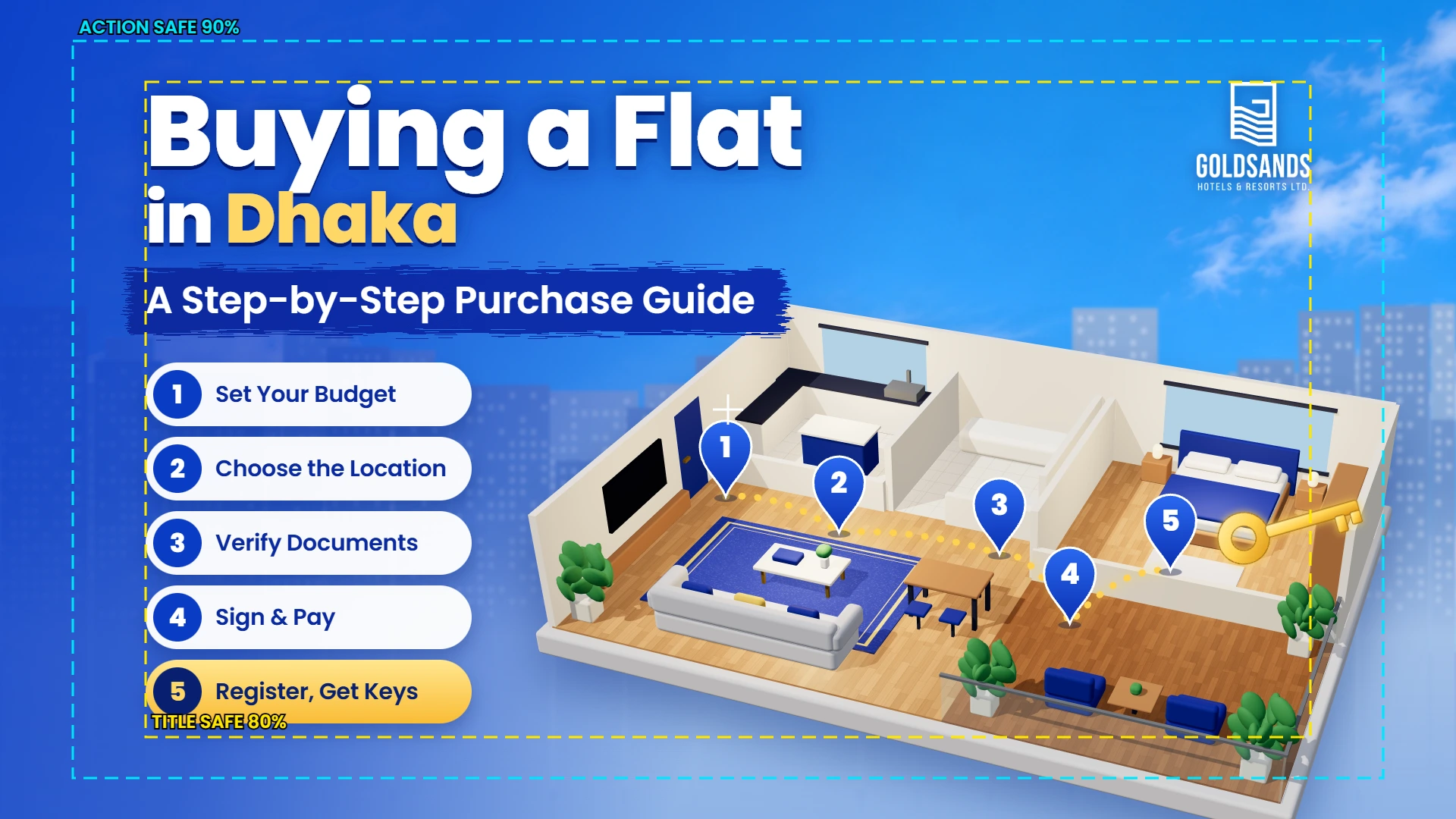
Buying a flat in Dhaka takes more than choosing a floor plan. You need to check the land, the approvals, the contract and the registration, and each step protects your money. This guide walks through the purchase in order, from budget to mutation.
We built it from published buyer guides and Daily Star property coverage, then added the questions we think every buyer should ask a developer. It sits next to our guide to land mutation in Bangladesh, which covers the final record update.
This article is general information, not legal advice. Hire a property lawyer to review your documents before you pay.
The listed price is rarely the final cost. A Daily Star property guide tells buyers to plan for registration fees and stamp duty, possible VAT, utility connection fees, parking and monthly maintenance.
Rates change and published figures differ. Ask the sub-registrar's office or your lawyer for current numbers, and add them to your budget before you sign.
A flat is only as safe as the land under it. Check the items below, which a Daily Star checklist for flat buyers names:
The same checklist flags one red flag: paperwork that is still "in process." Wait until every item is complete.
Legal ownership is not enough. The building must also meet government rules, the Daily Star property guide notes, so ask to see RAJUK approvals, structural design permissions and utility clearances.
Then look at the building itself:
If you can, visit a project the developer has already finished. Speak with residents about build quality and maintenance.
According to Assure Group, a Dhaka developer that publishes buyer guides, the agreement should state the price and payment schedule. It should also give the construction timeline and the handover date. Three terms deserve extra attention:
Never sign under pressure. Take the draft home and let your lawyer read it.
Pay through approved channels, such as a bank challan, and keep every receipt. Assure Group puts it plainly: do not make any payment without a receipt.
Registration is the legal transfer. Assure Group says the buyer, the seller and witnesses usually attend the sub-registrar's office. Staff there check the deed, receipts and IDs, and collect fingerprints and photos. Check every name and NID number before you sign, since corrections later can be slow. The same guide warns that without registration the purchase is not legally complete.
Buyers usually bring these items, per Assure Group:
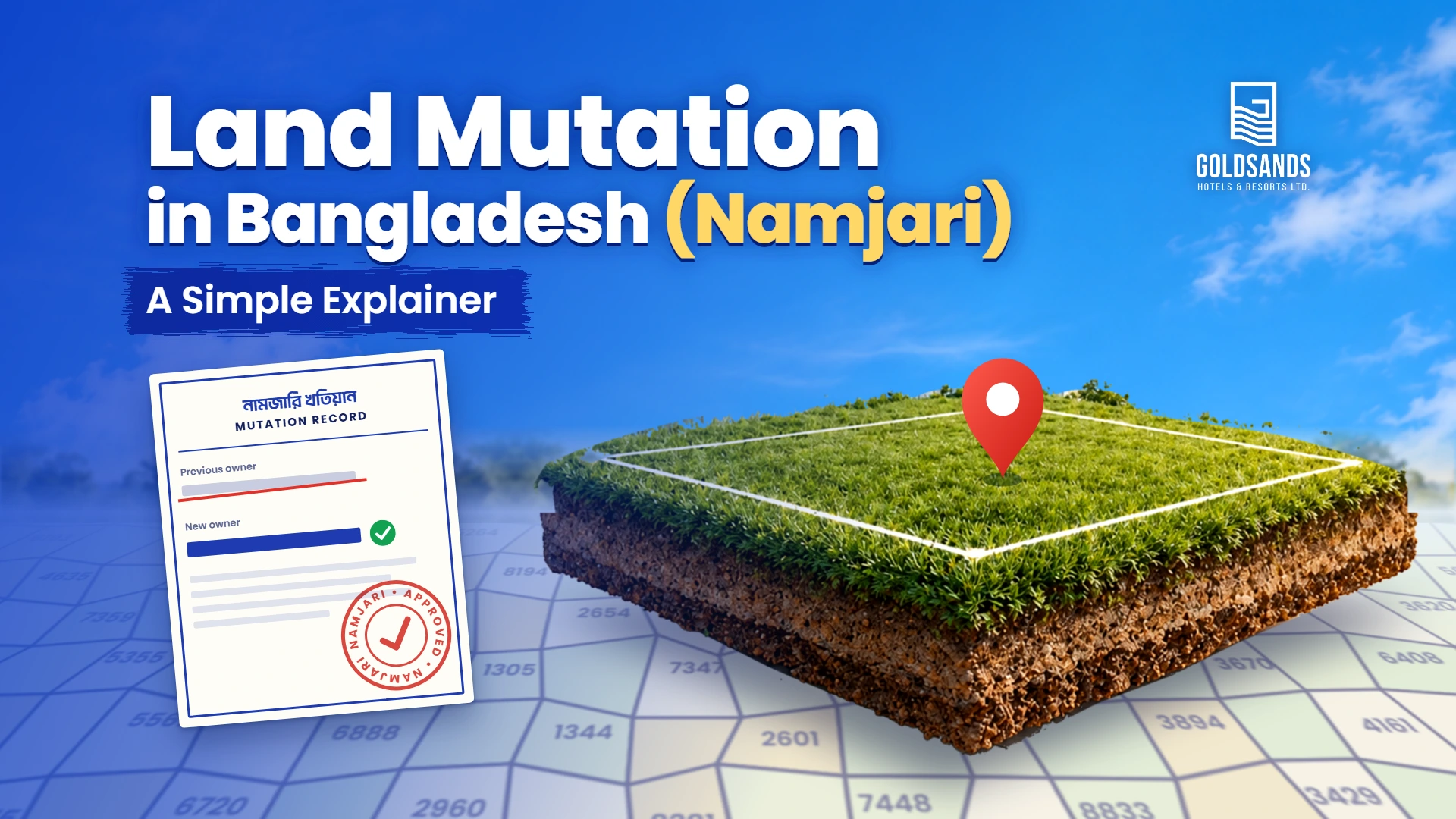
After you collect the registered deed, apply for mutation so the government record carries your name. Our guide to land mutation in Bangladesh explains the steps.
Keep both original and scanned copies of the deed, the receipts and the agreement.
Put these questions to every developer, including us, and ask for answers in writing:
Gold Palace is Goldsands' apartment project in Dhaka. Its project page offers a brochure download, a floor plan, and 3D photos and videos. It does not state approvals, handover or payment terms. Ask our team for those details, then check them against the list above.
You typically need your NID or passport, a TIN certificate and photographs. Ask to see the seller's title deed, mutation record, tax receipts and the approved building plan as well.
Ask the developer for the approval letter, then confirm it with the authority before you pay.
Do both. Registration completes the legal transfer, and mutation updates the government land record.
Plan for registration costs, taxes, utility connections, parking and maintenance. Published figures vary, so get current rates from the sub-registrar's office.
Yes. A property lawyer can check the title chain, the approvals and the agreement before you pay.
Work through the six steps in order, and pause whenever a document is missing. A careful buyer pays once, registers once and sleeps well after handover.
Ready to compare options? Review Gold Palace, download the brochure, or message our team on WhatsApp. Planning to buy land instead? Start with our 8 checks before you buy land.

_2026_11_10_12_13_07_396.png)